
How Long Should Tires Last? Tire Lifespan and Aging
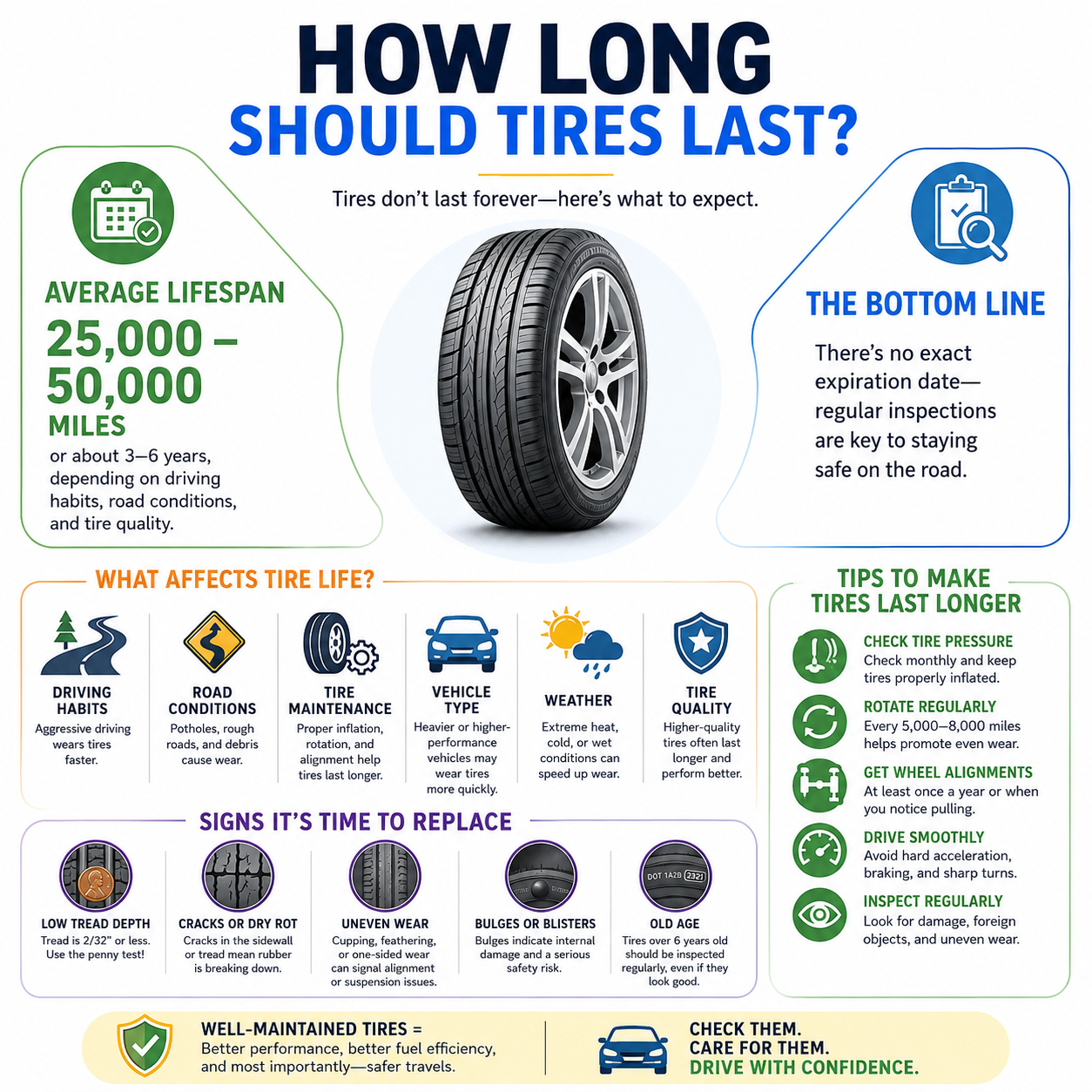
If you’re asking how long tires should last, you’re already at the decision point that most drivers delay too long. Tire lifespan isn’t fixed; it’s a function of compound, load, heat cycles, and maintenance discipline. Ignore those variables, and even premium tires wear out early. Manage them correctly, and you can extract the full engineered lifespan without compromising safety.
For most passenger vehicles, the baseline expectation is 50,000 to 70,000 miles. That’s a general range, not a guarantee. Some tires fail at 30,000 miles due to poor maintenance. Others push beyond 80,000 with controlled driving and consistent service from a qualified tire shop.
The Real Factors That Determine Tire Lifespan
Tire wear is predictable when you understand what drives it:
- Tire Type and Construction
Not all tires are built for longevity. Performance tires use softer rubber compounds to maximize grip, which accelerates wear. Touring and all-season tires prioritize durability and can last significantly longer. Light truck and SUV tires also vary depending on load rating and intended use.
- Driving Conditions
City driving with frequent braking and acceleration wears tires faster than highway cruising. Rough roads, debris, and temperature swings also accelerate tread degradation. Heat is one of the biggest contributors to premature wear, especially in stop-and-go environments.
- Driving Behavior
Aggressive acceleration, hard braking, and fast cornering create uneven tread wear patterns. Over time, this leads to reduced contact patch efficiency and earlier replacement.
- Vehicle Alignment and Suspension
Misalignment doesn’t just affect handling; it destroys tires. Even slight camber or toe issues can cause rapid, uneven wear across the tread. Suspension wear compounds the problem by creating inconsistent load distribution.
- Maintenance Practices
This is where most drivers lose tire life. Regular rotation, balancing, and pressure checks directly extend tread life. Skipping these services shortens lifespan.
Mileage vs. Time: The Overlooked Variable
Even if you don’t drive often, tires degrade over time. Rubber compounds dry out, lose elasticity, and develop microcracks. Most manufacturers recommend replacement at six years, regardless of mileage, with an absolute limit around 10 years.
If your tires “look fine” but are aging out, they’re not fine. Structural integrity matters more than tread depth at that point.
How to Tell When Your Tires Need Replacement
Mileage estimates are useful, but real-world inspection matters more. Here’s what actually indicates replacement:
Tread Depth Below 2/32″
This is the legal minimum in most states, but from a performance standpoint, traction drops well before that, especially in wet conditions.
Uneven Wear Patterns
Feathering, cupping, or edge wear signals alignment or suspension issues. Replacing tires without correcting the root cause just causes the problem to repeat.
Cracking or Dry Rot
Visible cracks in the sidewall or tread indicate material breakdown. This is common in older tires or vehicles that sit for long periods.
Vibration or Noise
Unusual vibration at speed often points to internal tire damage or imbalance. This isn’t something to ignore.
How to Maximize Tire Life (What Actually Works)
If you want your tires to last closer to the upper end of their lifespan, the process is straightforward, but non-negotiable:
Routine Tire Rotation
Rotate every 5,000-7,500 miles. This ensures even wear across all four tires, which is especially critical for front-wheel-drive vehicles where the front tires handle more load.
Maintain Proper Inflation
Underinflation increases rolling resistance and heat buildup, which accelerates wear. Overinflation reduces the contact patch and causes center wear. Check pressure monthly.
Wheel Alignment Checks
Alignment should be checked annually or whenever you notice steering pull. This is one of the most overlooked factors in premature tire replacement.
Balance and Inspection
Balancing prevents uneven wear and vibration. Inspections catch early-stage issues before they become expensive problems.
Stay Consistent with Oil Change Intervals
An oil change is the easiest checkpoint to bundle tire inspections and rotations. If you’re already scheduling routine service, there’s no reason to skip tire maintenance.
Why Tire Lifespan Directly Impacts Cost
Most drivers think they’re saving money by delaying replacement or skipping maintenance. The opposite is true.
- Uneven wear reduces usable tread life.
- Poor inflation increases fuel consumption.
- Misalignment accelerates replacement cycles.
- Worn tires increase braking distance and risk.
Tires are a controlled wear component. The goal isn’t to stretch them as long as possible, it’s to extract full value safely.
When It’s Time: Shop Tires Online and Replace Strategically
Once your tires reach the end of their usable life, delaying replacement compromises safety and performance. At that point, the focus shifts from maintenance to selection.
Working with a professional tire shop ensures you choose the right tire based on:
- Vehicle specifications
- Driving conditions
- Performance vs. longevity priorities
- Budget constraints
At Kennedy Tire & Auto Service, drivers in Edmond can find a full selection of tires for passenger vehicles, SUVs, and light trucks. Instead of guessing, you can shop for tires online, compare options, and schedule installation in one streamlined process.
Why Kennedy Tire & Auto Service Matters
Since 1974, Kennedy Tire has operated as a full-service tire shop focused on long-term vehicle performance—not just transactions. With an 18-bay facility, certified technicians, and a reputation built on consistency, the approach is simple: Fix the root cause, not just the symptom.
That means when you come in for tires, you’re not just getting a replacement, you’re getting:
- Proper installation and balancing
- Alignment checks to prevent repeat wear
- Rotation scheduling to extend lifespan
- Ongoing service tied to your vehicle’s condition
Replacing Tires Before Failure Is Usually Cheaper Than Waiting
A lot of drivers treat tires like a component that only matters once it becomes visibly worn out or completely unsafe. In reality, waiting too long often creates a chain reaction of additional costs: reduced fuel efficiency, poor wet-weather traction, suspension stress, and accelerated wear on the remaining tires.
That becomes even more expensive when multiple tires need replacement at once.
To avoid delaying necessary service, many tire shops now offer financing programs that allow drivers to break larger tire purchases into smaller payments over time. Instead of driving on compromised tread while waiting for the “right time” financially, drivers can replace tires when performance actually starts to decline.
Depending on the shop, financing may cover:
- Tire purchases
- Mounting and balancing
- Alignment services
- TPMS repairs
- Rotation and maintenance packages
For higher-mileage drivers or families managing multiple vehicles, financing can make routine tire replacement more predictable and easier to budget for year-round.
Why Tire Shops Often Catch Problems Dealerships Miss
Dealership service departments usually operate around manufacturer maintenance schedules. Tire shops operate around wear patterns.
That distinction matters.
A dedicated tire shop spends all day evaluating tread behavior, alignment changes, sidewall fatigue, road-force vibration, and irregular wear caused by real-world driving conditions. Instead of simply recommending the OEM replacement tire, they often compare how different compounds, tread patterns, and load ratings will behave over time based on the vehicle and driving habits.
For drivers focused on maximizing tread life and avoiding repeat replacement cycles, that specialization can be a major advantage over dealership service centers.
In many cases, drivers also benefit from:
- Faster appointment turnaround
- More direct access to technicians
- Broader tire selection across price ranges
- Maintenance plans specifically focused on tire longevity
When tire lifespan is the priority, working with a shop that focuses heavily on tire wear analysis and maintenance strategy can provide more value than a general dealership service model
Final Answer: How Long Should Tires Last?
Tires should last as long as their design allows, and no longer. For most drivers, that means 50,000-70,000 miles with proper maintenance, or about six years in real-world conditions.
Anything less is usually preventable. Anything more is a risk.
Ready to get the most out of your tires, or replace them when it’s time? Shop tires online or book an appointment with Kennedy Tire today.