Transmission Fluid Change Intervals: When Should You Replace Transmission Fluid?
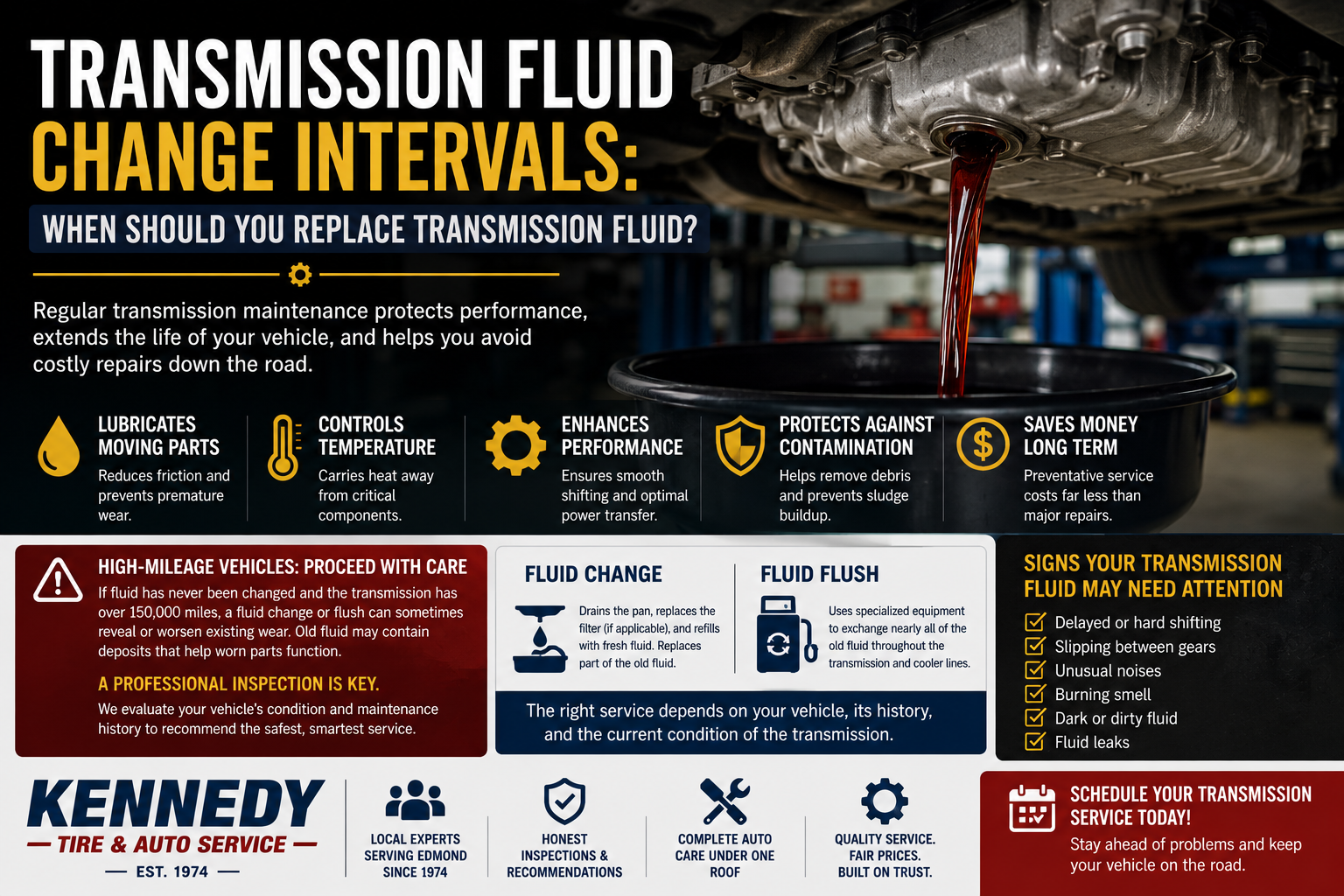
Transmission Fluid Change Intervals: When Should You Replace Transmission Fluid?
Most drivers know they need regular oil changes. Ask those same drivers about transmission fluid, however, and you’ll often get a different answer. Some assume transmission fluid lasts forever. Others have heard conflicting advice about whether it should ever be changed at all. Unfortunately, waiting until transmission problems appear can turn a relatively affordable maintenance service into a repair bill worth thousands of dollars.
A transmission fluid change is one of the most important preventative maintenance services you can perform for your vehicle. Understanding when to replace transmission fluid can help improve performance, extend vehicle life, and protect one of the most expensive components under the hood.
What Does Transmission Fluid Do?
Transmission fluid serves several critical functions inside your vehicle’s transmission.
It lubricates moving parts, helps transfer power, reduces friction, prevents excessive wear, and carries heat away from internal components. In automatic transmissions, the fluid also plays a direct role in the shifting process.
Over time, transmission fluid begins to break down. Heat, friction, and normal wear gradually reduce its effectiveness. As the fluid ages, it can become contaminated with debris and lose its ability to properly protect transmission components.
Just like skipping an oil change can damage an engine, neglecting transmission maintenance can shorten the life of your transmission.
How Often Should You Get a Transmission Fluid Change?
There is no single answer that applies to every vehicle. Many manufacturers recommend a transmission fluid change somewhere between 30,000 and 60,000 miles. Some newer vehicles may have intervals closer to 100,000 miles under ideal driving conditions.
The best place to start is your owner’s manual. Manufacturer recommendations are based on your vehicle’s specific design and operating requirements. However, real-world driving conditions often require more frequent service.
You may need transmission service sooner if you regularly:
- Drive in heavy stop-and-go traffic
- Tow trailers or heavy loads
- Drive in extremely hot temperatures
- Frequently travel on steep grades
- Use your vehicle for commercial purposes
- Make short trips that prevent systems from fully warming up
These conditions create additional heat and stress, causing transmission fluid to degrade more quickly.
Why Transmission Fluid Isn’t a Lifetime Fluid
Many vehicle owners have heard the phrase “lifetime fluid” and assume transmission service is unnecessary. In reality, fluid doesn’t stop aging simply because a label says it’s designed for long-term use.
Even advanced synthetic transmission fluids experience wear over time. Heat cycles, contamination, and normal operation gradually reduce their effectiveness.
A vehicle driven under ideal conditions may go longer between services. However, most drivers encounter traffic, temperature extremes, and other conditions that place additional demands on their transmission.
Routine maintenance remains one of the best ways to protect long-term reliability.
Warning Signs Your Transmission Fluid May Need Attention
Following recommended service intervals is important, but your vehicle may also provide warning signs when transmission fluid is becoming a problem.
Common symptoms include:
- Delayed shifting
- Rough or hard shifts
- Slipping between gears
- Unusual noises during shifting
- Hesitation during acceleration
- Transmission overheating warnings
- Burning odors
- Fluid leaks beneath the vehicle
These symptoms do not always mean the transmission has failed. In some cases, old or contaminated fluid may be contributing to the problem. Addressing concerns early often provides more options and lower repair costs.
What Happens If You Delay Transmission Service?
Many drivers postpone maintenance because the vehicle still seems to be running normally.
Unfortunately, transmission wear often develops gradually. As fluid loses its protective properties, friction increases. Internal components experience additional stress. Temperatures rise. Over time, this can accelerate wear on clutches, bearings, seals, and other critical parts.
The result may be:
- Reduced fuel efficiency
- Poor drivability
- Increased transmission temperatures
- Premature component wear
- Expensive transmission repairs
- Complete transmission failure
Considering that transmission replacement costs can easily reach several thousand dollars, routine maintenance is often one of the most cost-effective investments you can make in your vehicle.
Transmission Fluid Changes and Long-Term Vehicle Reliability
Drivers often focus on highly visible maintenance items like tires, brakes, or an oil change schedule. Transmission service deserves the same attention.
A properly maintained transmission can help provide:
- Smoother shifting
- Better overall performance
- Reduced wear on internal components
- Improved reliability
- Longer vehicle lifespan
- Lower ownership costs over time
When maintenance is performed proactively, you’re less likely to experience unexpected breakdowns or major repair expenses.
That’s especially important for drivers who rely on their vehicle every day for work, school, family activities, and travel.
Transmission Fluid Change vs. Transmission Flush
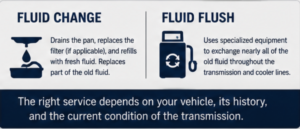
Many drivers use these terms interchangeably, but they are not the same service.
A transmission fluid change replaces a portion of the old fluid, typically by draining the transmission pan, replacing the filter (when serviceable), and refilling with fresh manufacturer-approved fluid.
A transmission flush uses specialized equipment to exchange nearly all of the old fluid throughout the transmission, torque converter, and cooler lines.
For well-maintained transmissions, either service may be appropriate depending on the manufacturer’s procedure. However, for older, neglected transmissions, many experienced technicians prefer a standard fluid and filter change rather than a high-pressure flush, since flushing may disturb accumulated debris inside an already worn transmission.
The correct service depends on your vehicle, its maintenance history, and the transmission’s current condition.
Can Changing Transmission Fluid in a High-Mileage Vehicle Cause Problems?
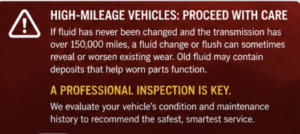 This is one of the most common—and most misunderstood—questions in automotive maintenance.
You may have heard someone say, “Don’t change the transmission fluid after 150,000 miles or you’ll ruin the transmission.”
There is a grain of truth behind that advice, but the transmission fluid itself is not what causes the problem.
If a transmission has gone well beyond its recommended service interval without ever having the fluid changed, the fluid may contain a significant amount of suspended clutch material and wear particles. Inside an already worn transmission, those particles can actually increase friction between worn clutch packs. When fresh fluid with a full package of detergents and friction modifiers is introduced, some of those deposits may be cleaned away, revealing wear that was already present.
In other words, the fluid change didn’t damage the transmission—it exposed internal wear that had been developing for years.
For that reason, experienced technicians don’t simply recommend a transmission service based on mileage alone. They consider several factors, including:
- The vehicle’s maintenance history
- Current mileage
- Transmission performance
- Fluid color and odor
- Whether the transmission is already slipping or shifting harshly
- Manufacturer recommendations
If a transmission has been serviced regularly throughout its life, continuing to replace the fluid at the recommended intervals is almost always beneficial.
However, if a vehicle has well over 150,000 miles, has never had the transmission serviced, and is already showing signs of slipping or internal wear, replacing or flushing the fluid may not solve the problem—and in some cases, it can accelerate symptoms that were already developing.
That’s why professional inspection is so important. Rather than relying on mileage alone, an experienced technician can evaluate the condition of both the transmission and the fluid before recommending the appropriate service.
Protecting Your Vehicle Beyond the Transmission
Preventative maintenance works best when viewed as a complete vehicle care strategy.
A transmission fluid change should be considered alongside other essential services, including:
- Oil changes
- Tire rotations
- Brake inspections
- Cooling system maintenance
- Battery testing
- Wheel alignments
Each system affects overall vehicle performance and reliability. Staying ahead of maintenance helps prevent small issues from becoming larger, more expensive problems. For example, many drivers visit a tire shop to replace worn tires but overlook other maintenance needs that may impact vehicle safety and performance. Combining routine inspections with regular service visits can help identify concerns before they lead to breakdowns.
If you’re already planning to shop tires online or schedule tire service, it’s a great opportunity to review your vehicle’s overall maintenance schedule as well.
Don’t Wait Until Problems Appear
Transmission issues rarely improve on their own. In most cases, delaying service only increases the likelihood of more extensive repairs later. Routine transmission maintenance is one of the simplest ways to protect your investment, improve vehicle longevity, and avoid unnecessary repair costs.
At Kennedy Tire & Auto Service, we’ve been helping Edmond drivers keep their vehicles running reliably since 1974. From routine maintenance and transmission fluid changes to tires, inspections, and complete automotive service, our experienced team focuses on helping customers prevent costly repairs before they happen.
If you’re unsure whether your vehicle is due for transmission service, schedule an inspection with our team. We’ll help you understand your manufacturer’s recommendations, evaluate your vehicle’s condition, and keep you on track for long-term reliability without dealership pricing.